How a task-verification link works, if I imagine I am the one building it
A thought experiment about proof on social-task platforms: public URLs in, a callback or review out, and no password anywhere in the flow.
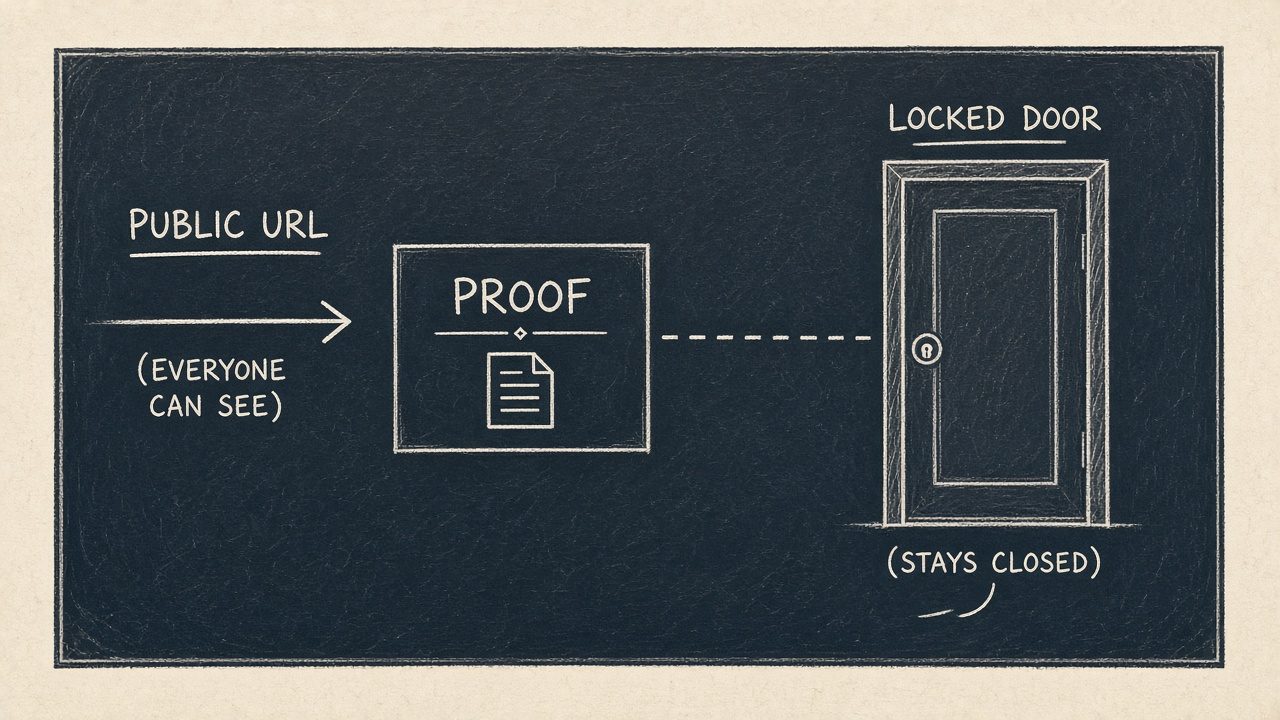
Subtitle: A thought experiment about proof on social-task platforms: public URLs in, a callback or review out, and no password anywhere in the flow.
Meta description: Sketching a task verification flow from the builder's side: public profile URLs as proof, a callback URL for status, and why credentials never belong in it.
Tags: webdev, api, security, architecture, sidehustle
Hashnode · Amara Earns · earner · 1 tracking link
I write about FoxiGrow and I am affiliated with it. I don't have access to FoxiGrow's code, and this post doesn't describe how their verification actually works internally. It's a design sketch: how I would build a verification step for social tasks if it were my job, and what that tells me, as an earner, about requests I should refuse.
I'm Amara Okafor, a side-hustle writer in Lagos. I spend most of my time on the earning side of these apps, submitting follows and joins. Thinking through the builder's side has made me much quicker at spotting a brief that's asking for the wrong thing.
Quick facts
Last checked 20 Nov 2026, Open the FoxiGrow advertiser site and foxigrow.com/faq.
- The advertiser site says an order needs a public link, not a password.
- The earner FAQ says you connect the matching social account so completions can be verified, and that linking is free.
- I do not have access to FoxiGrow’s source code. This remains a design sketch, not a leak of their internals.
The objects in play
Strip it down and there are three things.
A task: an advertiser wants an action on a public target. Follow this profile, like this post, join this channel. The target is a URL anyone can open.
A submission: a worker says they did the action. They provide something the system can check.
A verdict: approved, rejected, or pending. The worker's balance moves only on approved.
Everything else is plumbing. The interesting design question is what goes in the submission, because that decides what the worker has to hand over.
What a submission should contain
If I were building this, the submission would carry public identifiers only. The worker's handle on the platform, or the URL of their public profile. Maybe a fresh screenshot showing the action. A timestamp. The task ID.
That's enough to check most social actions. A follow shows up in a public followers list, or at least on the worker's own following list. A like may be visible on the post. A channel join can sometimes be confirmed through a bot that has admin rights on that channel. That's why some platforms ask the advertiser, not the worker, to add a bot as admin. The privilege sits with the person who owns the target.
Notice what's missing: the worker's password, a session cookie, an OTP, an OAuth grant with write scopes. None of those are needed to check that something public happened. They're only needed to do things as the worker. A verification system that asks for them is either badly designed or isn't a verification system.
Where a callback URL fits
On the advertiser side, I'd want status to flow out without polling. So the order might carry a callback URL: when a submission is verified, my system sends a small payload to it with the task ID, the new status and a count. The advertiser's dashboard updates. No one refreshes.
Two design rules I'd hold to here. First, the callback carries status, not secrets. No worker identities beyond what's needed, and certainly no credentials. Second, the receiver should treat each callback as a hint and confirm it against the API, because anyone can POST to a URL. Sign the payload, include an ID, make it safe to deliver twice.
For the worker, the equivalent is simpler: a status on their submission that moves from pending to approved or rejected, with a reason when it's rejected. That's the worker's "callback," just rendered in a UI.
Why the password never belongs in the flow
Here's the argument in one paragraph. Verification is a read operation on public data. Credentials grant write access to private accounts. Mixing the two means the platform could act as you, post as you, change your settings or lock you out, and you'd have no way to tell which of those it did. Even a well-meaning operator becomes a breach target holding thousands of logins.
So when I see a task brief, on any app, that says "log in through our page so we can verify" or "send your OTP to confirm," I know it's not a verification step. It's an account handover with a verification label on it. I close it.
FoxiGrow's public pages describe this from the advertiser side: orders need a public link, not a password. That matches the sketch above. I'm affiliated, so here's the address I type, once:
Sign up on FoxiGrow (my referral link)
You can type the domain by hand if you'd rather not click.
What this means for me as a worker
Thinking like the builder gives me a few concrete habits.
Proof should be fresh and specific. If the system checks timestamps, a recycled screenshot will fail, and it should.
Rejections should come with a reason I can act on. If they don't, I skip that style of task next time.
The action has to stay standing. If verification re-checks later, and a sensible system might, an unfollow after approval will show up. FoxiGrow says not to unfollow after you've been paid, and the design logic explains why: the check isn't a one-time event.
And the hard line: I give public identifiers, never credentials. The whole design works without them. Anyone who says otherwise is describing a different product, and it isn't one I want to use.
I haven't seen anyone's source for this, and I'm not claiming a verified rate or a review time. It's a sketch. But it's a useful one, because the shape of a sound design tells you exactly which requests don't fit it.
FAQ
Why should a task-verification link never ask for a password?
Because verification is a read on public activity: a follow, a like, a join. A password grants write access to a private account. A system that needs your login to “check” a public action is badly designed or is not a verification system.
What would you put in a submission object?
Public identifiers only: a handle, a public profile URL, maybe a fresh screenshot, a timestamp, a task ID. That is enough to inspect most social actions. Cookies, OTPs and recovery phrases are not proof. They are handover.
What is a callback URL for, in this sketch?
It is how an advertiser’s dashboard can hear that a submission changed status, without polling. The payload should carry status, not secrets, and the receiver should confirm it against an API because anyone can POST to a URL. Sign it, include an ID, make it safe to deliver twice.
Does FoxiGrow actually work this way internally?
I don’t know, and I will not pretend I do. I am affiliated, and their public advertiser pages do say they need a public link rather than a password, which matches the shape I would insist on as an earner.
Where can I read the official earner rules?
FoxiGrow FAQ and Withdrawals. Signup, if you want it: Sign up on FoxiGrow (my referral link). You can type the domain yourself.
Last checked
20 Nov 2026, official public pages only. Related: BEP-20 and TRC-20 addresses are not interchangeable.
Comments
Join the discussionNo comments yet. Be the first to comment.